Monday, January 9, 2012

U.S. condemns reported Iran death sentence for former U.S. Marine


The State Department said Monday that it was working to confirm Iranian state media reports that an Iran court had sentenced an American citizen, Amir Mirzaei Hekmati, to death on charges of spying for the CIA.
"If true, we strongly condemn this verdict," State Department spokeswoman Victoria Nuland said in a press statement Monday. "Allegations that Hekmati either worked for, or was sent to Iran by the CIA, are simply untrue."
Hekmati "has 20 days to appeal the court's decision," the Washington Post's Thomas Erdbrinkreported from Tehran.
Hekmati, 28, a former U.S. Marine Arabic language translator in Iraq, was born in Flagstaff, Arizona of Iranian descent and raised in Michigan. His family in Michigan, former colleagues and American officials say Hekmati never served in the CIA and was in Iran to visit his grandmother.
Hekmati's parents said they "are shocked and terrified" by the news, his mother Behnaz Hekmatiwrote at the website the family set up to advocate for Amir's release, FreeAmir. "We believe that this verdict is the result of a process that was neither transparent nor fair."
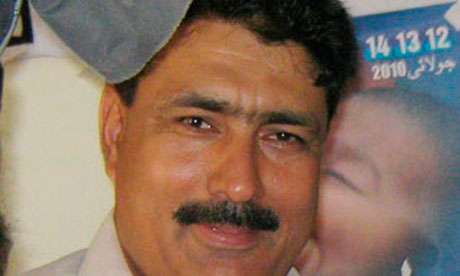
Amir Hekmati on vacation in Colombia in 2010. (Courtesy of Hekmati family/Yahoo News)

"Amir did not engage in any acts of spying, or 'fighting against God,' as the convicting Judge has claimed in his sentence," his mother's press statement continues. "A grave error has been committed, and we have authorized our legal representatives to make direct contact with the Iranian authorities to find a solution to this misunderstanding."
Hekmati had the permission of the Iranian interests section--the U.S.-based diplomatic outpost for the Islamic republic--in Washington D.C. to travel to Iran in August to visit his elderly grandmother, his family has told Yahoo News. After his arrest on August 29, Iranian officials initially urged the family to keep quiet in order to facilitate his release.
But in December, Iranian state media aired video of Hekmati allegedly confessing to having worked as a CIA agent--charges his family and friends vehemently deny and which they said appear to have been given under duress.
Hekmati joined the Marines in 2001 after graduating from high school. He was posted to Iraq after attending language school in Monterey, Calif. He left the Marines in 2005, and later worked for various companies, including based in Kansas for the government contractor BAE Systems from March until September 2010, Yahoo News previously reported.
Former U.S. Marine Jared Bystrom told Yahoo News Tuesday that Hekmati called him last year to propose launching a business together. Bystrom and Hekmati had been posted by the Marines to the defense language school in Monterey, California in 2001, where Hekmati studied Arabic.
Another friend and former colleague of Hekmati's, Chase Winter, told Yahoo News last month that Hekmati had told him he was thinking of going back to school to get a business degree.  Hekmati visited Winter in South America last September 2010 for a week's vacation, Winter said.
Hekmati's Facebook page until shortly after his Iran TV video "confession" last month featured photos of himself in various locales he had traveled and worked--hardly demonstrating the behavior of someone trying to conceal his activities, his associates note.
American officials again called on Monday for the Iran government to give Swiss diplomats consular access to Hekmati, to allow him to meet with a lawyer, and to release him "without delay."
"Securing the freedom and safety of this young man is the top concern of the U.S. government in this case," a U.S. official who requested anonymity said Monday. "Unfortunately, the Iranian government is not doing the right thing here.  They have a track record of falsely accusing individuals of espionage for leverage."

Wednesday, January 4, 2012

Iran threatens U.S. Navy as sanctions hit economy


TEHRAN (Reuters) - Iran threatened on Tuesday to take action if the U.S. Navy moves an aircraft carrier into the Gulf, Tehran's most aggressive statement yet after weeks of saber-rattling as new U.S. and EU financial sanctions take a toll on its economy.
The United States dismissed the Iranian threat, saying it was proof that sanctions imposed over Iran's nuclear program were working. The Pentagon said it would keep sending carrier strike groups through the Gulf regardless.
The prospect of sanctions targeting the oil sector in a serious way for the first time has hit Iran's rial currency, which reached a record low on Tuesday and has fallen by 40 percent against the dollar in the past month.
Queues formed at Tehran banks and some currency exchange offices shut their doors as Iranians scrambled to buy dollars to protect their savings. World oil prices jumped more than 4 percent.
Army chief Ataollah Salehi said the United States had moved an aircraft carrier out of the Gulf because of Iran's naval exercises, and Iran would take action if the ship returned.
"Iran will not repeat its warning ... the enemy's carrier has been moved to the Sea of Oman because of our drill. I recommend and emphasize to the American carrier not to return to the Persian Gulf....we are not in the habit of warning more than once," he said.
The Pentagon appeared to walk a delicate line, assuring more "regularly scheduled movements" of aircraft carrier strike groups into the Gulf, but stopping short of announcing any special activity in response to the Iranian threat.
"The deployment of U.S. military assets in the Persian Gulf region will continue as it has for decades," the Pentagon said.
The aircraft carrier USS John C. Stennis leads a U.S. Navy task force in the region. It is now outside the Gulf in the Arabian Sea, providing air support for the war in Afghanistan, said Lieutenant Rebecca Rebarich, spokeswoman for the 5th Fleet.
The carrier left the Gulf on December 27 on a planned routine transit through the Strait of Hormuz, she said.
Forty percent of the world's traded oil flows through that narrow straight - which Iran threatened last month to shut if sanctions halted its oil exports.
Brent crude futures were up more than $4 in late Tuesday afternoon trade in London, pushing above $111 a barrel.
Asked at the Pentagon whether there was any U.S. military plan to bolster its presence in the Gulf or test the Iranian threat, spokesman George Little said: "No one in this government seeks confrontation over the Strait of Hormuz."
"It is important to lower the temperature," he said.
Tehran's latest threat comes at a time when sanctions are having an impact on its economy, and the country faces political uncertainty with an election in March, its first since a 2009 vote that triggered countrywide demonstrations.
The West has imposed the increasingly tight sanctions over Iran's nuclear program, which Tehran says is strictly peaceful but Western countries believe aims to build an atomic bomb.
After years of measures that had little impact, the new sanctions are the first that could have a serious effect on Iran's oil trade, which is 60 percent of its economy.
Sanctions signed into law by U.S. President Barack Obama on New Year's Eve would cut financial institutions that work with Iran's central bank off from the U.S. financial system, blocking the main path for Iran to receive payments for its crude.
The EU is expected to impose new sanctions by the end of this month, possibly including a ban on oil imports and a freeze of central bank assets.
Even Iran's top trading partner China - which has refused to back new global sanctions against Iran - is demanding discounts to buy Iranian oil as Tehran's options narrow. Beijing has cut its imports of Iranian crude by more than half for January.
White House spokesman Jay Carney said the latest Iranian threat "reflects the fact that Iran is in a position of weakness." State Department spokeswoman Victoria Nuland said it showed international pressure was "beginning to bite."
Turkish Foreign Minister Ahmet Davutoglu will visit his counterpart in Tehran on Wednesday to discuss Iran's nuclear program and developments in Iraq and Syria.
THREATS
Iran has responded to the tighter measures with belligerent rhetoric, spooking oil markets briefly when it announced last month it could prevent shipping through the Strait of Hormuz.
It then held 10 days of naval exercises in the Gulf, test firing missiles that could hit U.S. bases in the Middle East. Tuesday's apparent threat to take action against the U.S. Navy in international waters takes the rhetoric to a new level.
Experts still say they do not expect Tehran to charge headlong into an act of war - the U.S. Navy is overwhelmingly more powerful than Iran's sea forces - but Iran is running out of diplomatic room to avert a confrontation.
"I think we should be very worried because the diplomacy that should accompany this rise in tension seems to be lacking on both sides," said Richard Dalton, former British ambassador to Iran and now an associate fellow at Chatham House think tank.
"I don't believe either side wants a war to start. I think the Iranians will be aware that if they block the Strait or attack a U.S. ship, they will be the losers. Nor do I think that the U.S. wants to use its military might other than as a means of pressure. However, in a state of heightened emotion on both sides, we are in a dangerous situation."
Henry Wilkinson at Janusian Risk Advisory consultants said the threats might be a bid by Iran to remind countries contemplating sanctions of the cost of havoc on oil markets.
"Such threats can cause market confidence in the global oil supply to wobble and can push up oil prices and shipping insurance prices. For the EU powers debating new sanctions, this could be quite a pinch in the current economic climate."
The new U.S. sanctions law, if implemented fully, would make it impossible for many refineries to pay Iran for crude. It takes effect gradually and lets Obama grant waivers to prevent an oil price shock, so its precise impact is hard to gauge.
The European Union is expected to consider new measures by the end of this month. The sanctions would halt purchase of Iranian oil by EU members such as crisis-hit Greece, which has relied on easy financing terms offered by Tehran to buy crude.
French Foreign Minister Alain Juppe said Paris wants new measures taken by January 30, when EU foreign ministers meet. A German Foreign Ministry spokesman said Berlin was in talks with other EU states on "qualitatively new sanctions."
Greek government sources said that Athens, thought of as a possible veto-wielding holdout, was ready to support sanctions. One official told Reuters: "If the European Union decides to impose the sanctions, Greece will join them."
Michael Mann, spokesman for EU foreign policy chief Catherine Ashton, said member states would discuss the issue this week in the hope of agreeing on new steps before the January 30 meeting. "The ball is still in the Iranians' court," he said.
Iran has written to Ashton asking to restart talks over its nuclear program that collapsed a year ago. The EU says it does not want talks unless Iran is prepared to discuss serious steps, such as halting its enrichment of uranium.
CHINA CUTS IRAN OIL IMPORTS
Although China, India and other countries are unlikely to sign up to any oil embargo, tighter Western sanctions mean such customers will be able to insist on deeper discounts for Iranian oil, reducing Tehran's income.
Beijing has already been driving a hard bargain. China, which bought 11 percent of its oil from Iran during the first 11 months of last year, has cut its January purchase by about 285,000 barrels per day, more than half of the close to 550,000 bpd that it bought through a 2011 contract.
The impact of falling government income from oil sales can be felt on the streets in Iran in soaring prices for state subsidized goods and a collapse of the rial currency.
"The rate is changing every second ... We are not taking in any rials to change to dollars or any other foreign currency," said Hamid Bakshi at an exchange office in central Tehran.
The economic impact is being felt ahead of a nationwide parliamentary election on March 2, the first vote since a disputed 2009 presidential election that brought tens of thousands of Iranian demonstrators into the streets.
In a sign of political tension among Iran's elite, a court jailed the daughter of powerful former President Akbar Hashemi Rafsanjani on Tuesday for "anti-state propaganda."
Rafsanjani sided with reformists during the 2009 protests. Daughter Faezeh Hashemi Rafsanjani went on trial last month on charges of "campaigning against the Islamic establishment."
(Additional reporting by Hashem Kalantari in Tehran, Humeyra Pamuk in Dubai, Brian Love in Paris, Keith Weir and William Maclean in London; Angeliki Koutantou in Athens, Florence Tan in Singapore, Phil Stewart, Matt Spetalnick and Andrew Quinn in Washington; Writing by Peter Graff and Phil Stewart; Editing by Eric Beech and Matthew Jones)

Sunday, December 11, 2011

News From Across The Globe: Analysis: Newt Gingrich survives first big night o...

News From Across The Globe: Analysis: Newt Gingrich survives first big night o...: In his first debate Saturday as the polling Republican frontrunner, former House Speaker Newt Gingrich bore the brunt of the attacks from ...

Analysis: Newt Gingrich survives first big night of attacks


In his first debate Saturday as the polling Republican frontrunner, former House Speaker Newt Gingrich bore the brunt of the attacks from every contender on the stage on a host of issues. But after two hours of attacks in the forum, co-sponsored by Yahoo News, ABC News and the Des Moines Register, he appeared to escape relatively unscathed.
Prompted at times by ABC News moderators Diane Sawyer and George Stephanopoulos, all five of the GOP contenders on stage took shots at Gingrich at some point. But a relaxed and confident Gingrich delivered responses that  played out in a way to potentially strengthen his standing among Republicans in the Jan. 3 Iowa caucus.
Over the course of the night, Gingrich was challenged on his consulting for government-backed mortgage giant Freddie Mac, his past support for a government mandate to buy health insurance, his three marriages, a comment he made calling Palestinians an "invented" people, and even a proposal he once floated to build a colony on the moon. But despite the barrage, Gingrich appeared to coast largely above the fray.
After about 15 minutes of tame policy talk, Romney took the first shot when asked if he thought Gingrich was in the best position to defeat President Barack Obama in 2012.
"Well, of course I don't agree with that," Romney said. "I think a lot of people don't agree with that." Romney went on to criticize Gingrich for spending most of his career in Washington, comparing it to his years in the private sector.
"Let's be candid," Gingrich replied. "The only reasons you didn't become a career politician is because you lost to Ted Kennedy in 1994."
"You'd have been a 17-year career politician by now if you'd won," he said.
In what could have been the most devastating portion of the debate for Gingrich, a candidate now married to his third wife, the moderators asked whether someone who had cheated on a spouse could be trusted to run the country. Each candidate was given an opportunity to attack Gingrich on the issue before he could respond.
"If you cheat on your wife, you'll cheat on your business partners," Perry said. "I think that sends a very powerful message. . . . I think that issue of fidelity is important."
"Trust is everything," added former Pennsylvania Sen. Rick Santorum, who said marriage infidelity should not disqualify a candidate.
When they got to Romney, however, he declined to address Gingrich directly, but he emphasized his 42 years of marriage. Gingrich responded by saying that he has asked God for forgiveness and played up his own grandchildren but said that his past was fair game.
"I think that's a very, very important issue and I think people have to render judgment," Gingrich said. "I'm delighted at the way people have been willing to look at who I am, to look at what my record has been."
Even though most of the criticism was aimed at Gingrich, Romney will likely suffer the most from the contest. During a brief argument with Rick Perry, Romney challenged the Texas governor to a $10,000 bet that he never supported a national individual mandate to purchase health insurance in his book No Apology, as Perry accused. Expect to see that clip played repeatedly over the course of the campaign.
If Saturday's Republican presidential debate was the weathervane that would signal whether the Republican primary race would go negative in the days before the first caucuses and primaries, we're in for quite the slog.
Since Republican support for businessman Herman Cain began to slide--he dropped out of the race last weekend--Gingrich has replaced him as the the latest "anti-Mitt Romney" candidate. And based on the response from Romney's campaign this week, it is clear that Boston is taking Gingrich's rise seriously. Romney this week launched his very own blitzkrieg against Gingrich, deploying the many surrogates who have endorsed him to nail him at several angles. The campaign also released a bruising anti-Gingrich web video that reminded voters of the time he criticized the entitlement reform plan put forth by Republican Budget Committee Chairman Paul Ryan and passed by the House GOP, calling it  "right-wing social engineering."
Gingrich on Friday struck back, accusing Romney of "running to the left of Teddy Kennedy" when he ran for Senate in 1994. In those comments, Gingrich suggested that Romney is a politician who is only a conservative when it's convenient, a criticism that has been ruthlessly lobbed at the former governor for years. Later that day, Gingrich's team in Iowa blasted Romney for launching the latest attacks on Gingrich, calling the effort "a load of crap."
"What we're seeing from Mitt Romney is desperation and panic and I think that's going to be very frustrating to people who want to move forward," said Gingrich Iowa co-chairwoman Linda Upmeyer. "They don't want to see $3 million of attack ads. It's a bad way to go and he ought to reconsider that tactic. Because Iowans, we're not stupid people and we understand a load of crap when we see it. That isn't what wins you caucuses or elections here in Iowa."
Gingrich told Yahoo News in a recent interview that of all the lessons he had learned about himself while running for president of the United States, he was most surprised in his ability to resist the temptation to attack his fellow candidates. Throughout the campaign, Gingrich has made a point to deflect questions about other candidates, choosing to keep criticism narrowly focused on President Barack Obama or the media.
"I may be more capable of calm discipline than I would have guessed," Gingrich said in a Yahoo News interview in November. "Watch the way in which I am methodically not getting engaged in a fight with my friends."

Sunday, October 16, 2011

Anti-Wall St. movement grows to dozens of cities


NEW YORK (AP) — About 175 protesters who were part of a growing anti-Wall Street sentiment were arrested in Chicago early Sunday when they refused to take down their tents and leave a city park when it closed, police said, after a day of protests in cities around the world where thousands gathered to rally against what they see as corporate greed.
The arrests were mostly peaceful and came as somewhat of a contrast to many demonstrators elsewhere, who have taken care to follow laws in order to continue protesting Wall Street's role in the financial crisis and other grievances. Most of the marches were largely nonconfrontational, though dozens were arrested in New York and elsewhere in the U.S. when police moved to contain overflowing crowds or keep them off private property. Two officers in New York were injured and had to be hospitalized.
At least one protest grew violent. In Rome, rioters hijacked what had been a peaceful gathering and smashed windows, tore up sidewalks and torched vehicles. Repair costs were estimated at $1.4 million, the mayor said Sunday.
In Chicago, about 500 people had set up camp at the entrance to Grant Park on Saturday evening after a protest earlier in the day involving about 2,000, the Chicago Tribune reported. Police said they gave protesters repeated warnings after the park closed at 11 p.m. and began making arrests when they refused to leave.
Officers also asked protesters to take down their tents before beginning to cut them down to clear the area, police said. Protesters who were arrested would be released after background checks were done to make sure they didn't have any outstanding arrest warrants, police said. They could face fines for violating a municipal ordinance.
In New York, two dozen were arrested Saturday when demonstrators entered a Citibank branch and refused to leave, police said. They asked the branch to close until the protesters could be taken away.
Earlier, as many as 1,000 demonstrators also paraded to a Chase bank branch, banging drums, blowing horns and carrying signs decrying corporate greed. A few went inside the bank to close their accounts, but the group didn't stop other customers from getting inside or seek to blockade the business.
Lily Paulina of Brooklyn said she was taking her money out because she was upset that JPMorgan Chase was making billions of dollars, while its customers struggled with bank fees and home foreclosures.
"Chase bank is making tons of money off of everyone ... while people in the working class are fighting just to keep a living wage in their neighborhood," the 29-year-old United Auto Workers organizer said.
Police told the marchers to stay on the sidewalk, and the demonstration seemed fairly orderly as it wound through downtown streets.
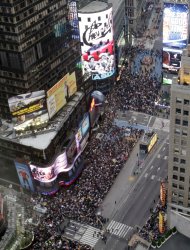
The day culminated in an event in the city's Times Square, where thousands of demonstrators mixed with gawkers, Broadway showgoers, tourists and police to create a chaotic scene in the midst of Manhattan.
"Banks got bailed out, we got sold out!" protesters chanted from within police barricades. Police, some in riot gear and mounted on horses, tried to push them out of the square and onto the sidewalks in an attempt to funnel the crowds away.
Sandra Fox, 69, of Baton Rouge, La., stood, confused, on 46th Street with a ticket for "Anything Goes" in her hand as riot police pushed a knot of about 200 shouting protesters toward her.
"It's horrible what they're doing," she said of the protesters. "These people need to go get jobs."
Sergio Jimenez, 25, said he quit his job in Texas to come to New York to protest. He participated in an anti-war march to mark the 10th anniversary of the Afghanistan War.
"These wars in Afghanistan and Iraq were all based on lies," Jimenez said. "And if we're such an intelligent country, we should figure out other ways to respond to terror, instead of with terror."
Throughout the country — from several dozen people in Jackson, Miss., to some 2,000 each in Pittsburgh and Chicago — the protest gained momentum.
Nearly 1,500 gathered for a march past banks in downtown Orlando, Fla. Hundreds marched on a Key Bank branch in Anchorage and declared it should be foreclosed. In Arizona, reporters and protesters saw an estimated 40 people detained around midnight at a park in Phoenix.
In Colorado, about 1,000 people rallied in downtown Denver to support Occupy Wall Street and at least two dozen were arrested.
Rallies drew young and old, laborers and retirees. In Pittsburgh, marchers included parents with children in strollers. The peaceful crowd stretched for two or three blocks.
"I see our members losing jobs. People are angry," said Janet Hill, 49, who works for the United Steelworkers, which she said hosted a sign-making event before the march.
Retired teacher Albert Siemsen said at a demonstration in Milwaukee that he'd grown angry watching school funding get cut at the same time banks and corporations gained more influence in government. The 81-year-old wants to see tighter Wall Street regulation.
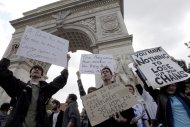
Around him, protesters held signs reading: "Keep your corporate hands off my government," and "Mr. Obama, Tear Down That Wall Street."
In Canada, demonstrators gathered in cities across the country, with hundreds of people protesting in the heart of Toronto's financial district. Some protesters spent the night at parks in Toronto and other cities.
Overseas, tens of thousands nicknamed "the indignant" marched in cities across Europe, as the protests that began in New York linked up with long-running demonstrations against government cost-cutting and failed financial policies in Europe. Protesters also turned out in Australia and Asia.
___
Associated Press writers Bob Seavey in Phoenix, Kevin Begos in Pittsburgh, Dinesh Ramde in Milwaukee, Charmaine Noronha in Toronto, Jack Elliott Jr. in Jackson, Miss., and Colleen Long, David B. Caruso and AP Radio correspondent Martin Di Caro in New York contributed to this report.

Thursday, October 13, 2011

Obama: Iran 'Will Pay a Price' for Assassination Plot


President Barack Obama said today that Iran will "pay a price" through sanctions and international pressure for its recent hostile behavior including the alleged Iran-directed plot to assassinate the Saudi Arabian ambassador to the U.S. in Washington, D.C.
Echoing previous statements by top U.S. officials, Obama said that when dealing with Iran, "We don't take any options off the table," but did not make any mention of possible military action in favor of pushing harsh economic sanctions and corralling international condemnation of Iran's alleged action.
"We're going to continue... to mobilize the international community to make sure that Iran is further and further isolated and pays a price for this kind of behavior," Obama said.
Obama declined to comment on whether he believed the highest levels of the Iranian government were aware or involved in the alleged plot, but said even if the Iranian president or supreme leader did not have "detailed operational knowledge, there has to be accountability with respect to anybody in the Iranian government engaging in this kind of activity."
U.S. Attorney General Eric Holder announced Tuesday the DEAand FBI had disrupted a plot "conceived, sponsored and... directed from Iran" to murder the Saudi Arabian ambassador to the U.S. in or outside a crowded Washington, D.C. restaurant which potentially would have been followed up by bombings of the Saudi Arabian and Israeli embassies. The U.S. said an Iranian-American, 56-year-old Manssor Arbabsiar of Corpus Christi, Texas, was working for elements of the Iranian government -- specifically Iran's elite military unit the Quds force -- when he attempted to hire hitmen from the feared Zetas Mexican drug cartel to carry out the hit, but Arbabsiar was unwittingly speaking to a DEA informant from the start.
The U.S. Treasury Department announced Tuesday sanctions against five Iranians allegedly tied to the plot and additional sanctions Wednesday against an airline company allegedly linked to the Quds force. U.S. representatives began Wednesday meeting separately with members of the United Nations Security Council as part of the American government's effort to "unite world opinion" against Iran, in the words of Vice President Joe Biden.
A lawyer for Arbabsiar has not returned requests for comment, but the man's wife, Martha Guerrero, said he was wrongly accused.

"I may not be living with him being separated, but I cannot for the life of me think that he would be capable of doing that," she told ABC News' Austin affiliate KVUE Tuesday, noting the two had been separated some time. "He was at the wrong place at the wrong time. I'm sure of that."
Iranian officials have strongly rejected the U.S. accusations, calling them a "fabrication." The head of the Iranian mission to the United Nations penned a letter Tuesday to U.N. Secretary General Ban Ki-moon expressing "outrage" at the allegations.
"The U.S. allegation is, obviously, a politically-motivated move and a showcase of its long-standing animosity towards the Iranian nation," the letter says. "The Islamic Republic of Iran categorically and in the strongest terms condemns this shameful allegation by the United States authorities and deplores it as a well-thought evil plot in line with their anti-Iranian policy to divert attention from the current economic and social problems at home and the popular revolutions and protests against United States long supported dictatorial regimes abroad."

Alleged Terror Plotter Claims He Was 'Directed By High-Ranking' Iranian Officials

The case, called Operation Red Coalition, began in May when Arbabsiar unwittingly approached a DEA informant seeking the help of a Mexican drug cartel to assassinate the Saudi ambassador, according to counter-terrorism officials.
Arbabsiar reportedly claimed he was being "directed by high-ranking members of the Iranian government," including a cousin who was "a member of the Iranian army but did not wear a uniform," according to a person briefed on the details of the case.
Arbabsiar and a second man, Gohlam Shakuri, an Iranian official, were named in a five-count criminal complaint filed Tuesday afternoon in federal court in New York. They were charged with conspiracy to kill a foreign official and conspiracy to use a weapon of mass destruction, a bomb, among other counts. Shakuri is still at large in Iran, Holder said.
Holder identified Shakuri as an Iran-based member of the Quds force.
Arbabsiar, a naturalized U.S. citizen, expressed "utter disregard for collateral damage" in the planned bomb attacks in Washington, according to officials.
The complaint describes a conversation in which Arbabsiar was allegedly directing the informant to kill the Saudi ambassador and said the assassination could take place at a restaurant. When the informant feigned concern about Americans who also eat at the restaurant, Arbabsiar said he preferred if bystanders weren't killed but, "Sometimes, you know, you have no choice, is that right?"
U.S. officials said Arbabsiar met twice in July with the DEA informant in the northern Mexico city of Reynosa, across the border from McAllen, Texas, and negotiated a $1.5 million payment for the assassination of the Saudi ambassador. As a down payment, officials said Arbabsiar wired two payments of $49,960 on Aug. 1 and Aug. 9 to an FBI undercover bank account after he had returned to Iran.
Officials said Arbabsiar flew from Iran through Frankfurt, Germany, to Mexico City Sept. 29 for a final planning session, but was refused entry to Mexico and later put on a plane to New York, where he was arrested.
Officials said Arbabsiar is now cooperating with prosecutors and federal agents in New York, where the case has been transferred.
"Though it reads like the pages of a Hollywood script, the impact would've been very real and many lives would've been lost," FBI Director Robert Mueller said of the foiled plot.
ABC News' Richard Esposito and Rym Momtaz contributed to this report.

Monday, October 10, 2011

Torture rife in Afghan detention facilities: U.N.


KABUL (Reuters) - Afghanistan's intelligence agency and police force have been "systematically" torturing detainees including children at a number of jails, in breach of local and international laws, a United Nations report said Monday.
Scores of people told the U.N. that the National Directorate of Security (NDS) and the Afghan National Police had physically or mentally abused them, using beatings, electrocution and toenail removal, according to the report.
But the head of the U.N. in Afghanistan, Staffan de Mistura, said that torture was neither institutional nor government policy, and praised the ministry and intelligence agency for allowing access to their prisons for research.
The Afghan government rejected many of the allegations, but conceded there may have been some abuse, and added that steps were being taken to prevent further problems.
Interviews with 379 pre-trial detainees and convicted prisoners were conducted at 47 different facilities by the United Nations Assistance Mission in Afghanistan (UNAMA) from October 2010 to August 2011.
The report said 324 of the detainees were accused of crimes related to the war.
There was systematic torture found at five NDS "facilities," the report said, and "multiple, credible allegations" of torture at two others. There were also some allegations from 17 other facilities that the U.N. said it was still investigating.
Almost half of those interviewed were suspected insurgents, 20 percent were arrested while carrying explosives and 11 percent were failed suicide bombers.
UNAMA said almost half of those it interviewed at NDS facilities experienced interrogation techniques that constituted torture. Of those in police facilities, more than a third of the 117 suspected insurgents or those believed to be assisting militants told UNAMA they had been subjected to torture or inhumane treatment.
Beyond physical mistreatment, which included sexual humiliation, many prisoners also said they had been held beyond the maximum duration allowed by law and denied family visits.
The United Nations said Afghanistan's difficult security situation did not justify any mistreatment.
FALSE CLAIMS?
The intelligence agency said in an official response that "reference has been made to some issues that are not in conformity with work principles of the NDS," and specifically rejected some allegations of mistreatment.
"Torture methods such as electric shock, threat of rape, twisting of sexual organs etc. are methods that are absolutely non-existent in the NDS," an official government response said.
The statement suggested some insurgent prisoners might be making false claims to discredit the government. However it also said several officials had recently been dismissed or suspended, and the agency was "keen for reform and improvement in the field of interrogation."
UNAMA said it had designed its study to take into account concerns from the Afghan authorities that detainees might give false accounts to discredit security agencies and further insurgent propaganda.
The Interior Ministry accepted there were cases of poor treatment of detainees in police custody, but said they were in the minority and it was committed to punishing violators and ensuring police were trained to protect human rights.
"It is evident ... that the outcome of the report cannot be totally rejected/denied due to some existing problems," it said.
The report follows a similar U.N. investigation into alleged torture that prompted NATO to halt transfers of prisoners to several southern Afghan jails in July.
Those findings raised questions about the capacity of Afghan security forces at a time when they are meant to be taking on greater security responsibilities ahead of a planned withdrawal of all foreign combat troops by the end of 2014.
The NATO-led International Security Assistance Force (ISAF) said it was made aware of UNAMA's findings last month and has since helped the Afghan government develop a six-stage plan to tackle torture, which included inspections, monitoring, training in human rights protection, and formal certification procedures.
"Initiatives being implemented will help strengthen rule of law, continue to enhance government credibility, and limit the appeal of the insurgency," ISAF said in a statement.
(Editing by Emma Graham-Harrison and Daniel Magnowski)

Friday, October 7, 2011

Hong Kong student's Apple tribute is Internet hit


Hong Kong design student said on Friday he was overwhelmed and felt "unreal" after his sombre logo in tribute to Apple founderSteve Jobs caused a worldwide Internet sensation.
The design, featuring Jobs's silhouette incorporated into the bite of a white Apple logo on a black background, has gone viral on the Internet since news of his death.
"I feel so unreal," Jonathan Mak, a second year graphic design student at Hong Kong Polytechnic University, told AFP, after he was inundated with tens of thousands of emails and messages on his Twitter account.
"You don't get to 180 thousands notes without feeling slightly insane," the 19-year-old posted on another microblogging site Tumblr Friday, referring to the messages he has received.
Mak said newspapers in the United States and Germany have contacted him about buying the copyright to use his logo and had received job offers.
"I am flattered by the attention but I would like to focus on my study before taking on any full-time job," said the bespectacled student, adding that he was trying to cope with his new-found fame.
"I'm quite busy now actually as I'm trying to finish a school project."
When asked about whether he would be targeting commercial opportunities, Mak said he was considering contacting Apple on copyright issues because his design is based on Apple's own logo.
Some merchandisers have reportedly used his logo for commemorative memorabilia for Jobs such as t-shirts and caps that are being sold on the Internet.
"I will consider using any proceeds I make from the copyright for cancer research, as suggested by some people to me on the Internet," he said. Jobs died at 56 of pancreatic cancer.
Mak said he first came up with the design after Jobs announced his resignation in late August, but the logo received little attention at the time.
The teenager said the Apple founder had inspired him in his design.
"He was a minimalist, which is the way I would like to emphasise in my design -- fewer elements but a powerful message."
"Steve Jobs strongly believed in his own ideas and continued with his beliefs no matter how people criticised him. He was courageous," said Mak.

Thirty-two bodies found in Mexican Gulf state


MEXICO CITY (Reuters) - Mexican security forces have found 32 bodies at several locations around the eastern city of Veracruz, authorities said Thursday, barely two weeks after 35 corpses were dumped on a busy street in the Atlantic port.
Just two days after the Mexican government unveiled a plan to lay down the law in the state of the same name, police and marines found the bodies in three separate areas of the city, the Navy said in a statement.
The bodies were in homes around the port as the military conducted operations under the new "Safe Veracruz" program, the statement said. Twenty bodies were found in one house that was searched after a tip from naval intelligence.
More than 44,000 people have died in drug-related violence since President Felipe Calderon launched a military campaign to crush Mexico's powerful drug cartels in late 2006.
The killings have damaged support for Calderon's ruling conservatives, who face a major struggle to hold onto power in presidential elections due next July.
Earlier Thursday, Calderon said there could be no turning back from the fight against the gangs.
"Part of the problem is that we didn't fight (gangs) before like we should have done," he said in a speech.
On September 20, 35 bodies were dumped in broad daylight in the Boca del Rio area of Veracruz. A vigilante-style group later claimed responsibility for the deaths.
Calling themselves the Zeta Killers, the group said it was targeting one of the most notorious of Mexico's drug gangs, which has stirred fears of paramilitary violence emerging.
Founded by renegade special forces soldiers, the Zetas have made a name for themselves as one of the bloodiest gangs in the country with countless slayings and kidnappings.
(Editing by Will Dunham)

Karzai: Taliban can't move finger without Pakistan


KABUL, Afghanistan (AP) — As the war in Afghanistan hit the 10-year mark Friday, President Hamid Karzai claimed the Taliban are being propped up by neighboring Pakistan, saying the militants can't lift a finger without the Pakistanis.
The war will only end when something is done to rout insurgents from their sanctuaries across the border in Pakistan, Karzai said in an interview with the BBC that aired on Friday, exactly 10 years after the U.S. and its allies invaded Afghanistan on Oct. 7, 2001.
The invasion was aimed at toppling the hard-line Taliban regime and punishing it for giving safe harbor to al-Qaida, which orchestrated the Sept. 11 attacks on the United States. Over the years, the U.S.-led coalition became mired in a battle against insurgents who have been weakened by international troops yet continue to plant bombs and stage suicide attacks and assassinations of top Afghan figures.
"Definitely, the Taliban will not be able to move a finger without Pakistani support," Karzai said. "The fact is the Taliban were and are stationed, in terms of their political headquarters and operational headquarters, in Pakistan. We all know that. The Pakistanis know that. We know that."
Militant sanctuaries in Pakistan won't go away unless the government of Pakistan cooperates with Afghanistan and the international community finds an effective way to remove the hide-outs, he said.
"We're not saying this in a manner of accusation and reprimand," Karzai added, trying not to inflame already strained relations between the two nations. "We are saying this in a manner of a statement intended towards a solution of the problem."
Pakistan maintains it cut off ties to the Taliban and other militants following the U.S. invasion of Afghanistan, but Washington and Kabul say otherwise.
President Barack Obama said Thursday that Pakistan was "hedging its bets" by maintaining ties to militant groups trying to undermine the Afghan government. Obama also acknowledged that the United States has not been able to persuade Pakistan that the U.S. goals of a stable Afghanistan pose no threat to Pakistan.
Just-retired Joint Chiefs of Staff Chairman Adm. Mike Mullen went further, recently calling the Taliban-affiliated Haqqani insurgent network a "veritable arm" of the Pakistani intelligence agency. Mullen also alleged that Pakistani intelligence supported militants who mounted a recent 20-hour rocket attack on the U.S. Embassy and NATO headquarters in the capital, Kabul.
In the wide-ranging interview, Karzai candidly said the Afghan government and international allies have failed to provide security for the Afghan people. He also said that his government wants to talk to the Taliban, but doesn't know where to contact legitimate representatives of the insurgency.
Former Afghan President Burhanuddin Rabbani, who was leading the government's U.S.-backed effort to talk peace with the Taliban, was killed Sept. 20 by an assassin who claimed to be an emissary from the Taliban. Upon meeting Rabbani, the killer detonated explosives he had tucked into his turban — a deadly blast that dealt a major setback to efforts to find a political resolution to the war.
The Afghan government with support from its international allies has been making peace overtures to the Taliban for years. But after Rabbani's death, Karzai shifted his policy, saying he was giving up trying to talk to alleged Taliban envoys. He said Pakistan holds the only key to making peace with insurgents and must do more to support reconciliation.
"We have not said we will not talk to them (the Taliban)," Karzai said. "We've said we don't know who to talk to.
"We're not dealing with an identifiable individual as a representative of the Taliban, or a place that we can knock on and say, 'Well, here we are. We want to talk to you.'"
"Until that place emerges — an address and a representative — we will not be able to talk to the Taliban because we don't know where to find them," he said.
The Taliban have not claimed responsibility for Rabbani's death.
Asked what needs to be improved in Afghanistan, Karzai acknowledged, "We've done terribly badly in providing security to the Afghan people and this is the greatest shortcoming of our government and of our international partners. What we should do is provide better and a more predictable environment of security to the Afghan citizens and in that, the international community and the Afghan government definitely have failed."
Violence continued Friday with attacks on at least three coalition posts in Paktika province near the Pakistan border.
A suicide bomber detonated a vehicle packed with explosives near the entrance to Combat Outpost Margah, which had also been hit with 22 rockets, according to an Associated Press reporter at the scene. Combat Forward Operating Base Tillman was hit with a half-dozen rockets and Forward Operating Base Boris was struck with two.
No deaths were reported among NATO service members.
Separately, the U.S.-led coalition said Friday that it is conducting an investigation to determine how a NATO service member died in southern Afghanistan. NATO did not disclose any other details about what led to the service member's death on Thursday.
So far this year, 458 NATO troops have been killed in Afghanistan. The death is the fourth so far this month.
In the capital, former Afghan Attorney General Abdul Jabar Sabet went missing Thursday afternoon after he was attacked by two gunman, said Mohammad Zahir, the chief of criminal investigation for the Kabul police.
___
Associated Press Writers Amir Shah in Kabul and Matt Ford in Paktika contributed to this report.

Thursday, October 6, 2011

Beating Butter: Denmark Imposes the World's First Fat Tax


Are the Danish facing an era of dry toast? On Oct. 1, consumers inDenmark saw a sudden jump in the cost of many of their favorite bread-friendly products. The average price of a half-pound package of butter increased by 2.5 krone (or 45 U.S. cents). A pound of cheese rose from 34.5 krone ($6) to 36 krone ($6.50). And don't even think about lard. In a single day, the cost of a half-pound block of pork fat skyrocketed from 12 krone ($2.15) to 16 krone ($2.85) — a 35% increase. Thanks to a new fat tax, Danes are paying more for just about anything they might want to slather on a piece of bread.
Other countries have imposed tariffs on food and drink considered unhealthy, but Denmark is taking the "fax tax" appellation literally. In the name of reducing cardiovascular disease, obesity, and diabetes, the law that went into effect on Saturday specifically targets saturated fats — the fats found most commonly in animal products like butter, cream, and meat. But few outside the government seem to think it's a good idea — or even a healthy one.(Read: "Bypassing Obesity for Alcoholism: Why Some Weight-Loss Surgeries Increase Alcohol Risk.")
The tax, the first of its kind in the world, imposes a 16 krone (roughly $3) hike per kilo of saturated fat on any food that contains more than 2.3%. Given current Danish consumption — they eat a lot of butter and sausage in Denmark — that should amount to somewhere around 82 million kilos (180 million lbs) of fat subject to the tax.
"At the political level there was a high degree of consensus for this law," says Tor Christensen, chief consultant for Denmark's Ministry of Taxation. "There was wide agreement about trying to improve the average Danish lifespan, about trying to improve the health of the Danish people." The tax was approved by nearly 90% of the Danish parliament. (See pictures of obesity rehab.)
It's not the first time that the Danish government has taken to regulating less-than-healthy foodstuffs. Sugar has long been subject to higher tariffs, though in its original incarnation, the tax was intended to raise revenue rather than improve public health. In 2004, Denmark became the first country in the world to ban transfats — the solid fats commonly used in snack foods and industrially produced baked goods. Experts say that ban has played a significant role in reducing rates of cardiovascular disease by over 30% in Denmark in the past several years.
People within the food industry aren't happy about the tax, however. "It's very frustrating how this has been implemented," says Poul Pedersen, managing director of Thise Mejeri, an organic dairy cooperative based in northern Denmark. Its 83 farmers produce 2,500 tons of butter per year — and all of them are facing diminished revenues now that they've had to raise prices. "We don't know by how much yet because it's very complicated to figure out, but of course we expect sales to go down," Pedersen says.
The tax applies to all saturated fats equally, regardless of whether they are contained in a McDonald's hamburger or a quart of milk from grassfed cows. That provision has particularly incensed the country's dairy farmers, who bristle at a categorization of their products as unhealthy, and whose recommendations, says Pedersen, were ignored by the government. "Of course we want people to eat heathfully," he says. "And no one should be eating a kilo of butter per day. But we in the dairy industry know that we produce a good and healthy product when it's eaten in moderation." (Can FoodCorps get America to eat healthfully?)
Restaurants too will feel the pain of the increasing costs. Christian Puglisi, chef of Copenhagen's highly-regarded Relae, hasn't yet raised menu prices, but knows he'll have to once he has tallied his purveyors' new invoices. The bureaucracy worries him less, though, than the tax's impact on the organic farms with which he does most of his business. "Organic is already more expensive than industrially produced [food], and the tax will just make it more so," Puglisi says. "But organic producers can't absorb the price increase the way that industrial can, so fewer people are going to be willing to buy it."
Although Danes have historically shown themselves willing to accept higher taxes that they deem beneficial to society, Puglisi doesn't believe this one fits that criteria. "The government says it wants to make people healthier, but it's talking with two tongues. It's just going to push more people to buy cheaper industrially produced products, rather than good food. It's insanely stupid."
Even medical professionals doubt the salutary effects of the law. "You can't predict the health effect of a food by looking at a single nutrient in it," says Dr. Arne Astrup, professor of human nutrition at the University of Copenhagen. "Take cheese, as an example. It's high in saturated fat, but it also contains calcium and protein that seem to change the fat's effect on the body. You would think that people who ate a lot of cheese would have higher risks of cardiovascular disease, but research has shown that's not the case." (See more on the fat tax in Denmark.)
With just under 10% of the population classified as obese, rates in Denmark are lower than Europe's 15% average, and fall significantly below the U.S.'s rate of 33.8%. Nevertheless, the average Danish lifespan of 79 years is lower than that of other Western European countries like Sweden (81.5 years), Spain (81.8 years) and France (80 years), a statistic that the departing center-right government (a center-left government took power on Oct. 3) hoped to improve with the tax.
However, Dr. Astrup says the tax ministry that proposed the measure is working with outdated data. "They based their decision on a report written in 2001," he says. "In 2001 all the available evidence suggested that we could achieve significant benefits by cutting saturated fats. But it turns out that a lot of that benefit came from cutting transfats, not saturated ones."
Many in Denmark believe the government was motivated more by financial concerns than health ones. Dr. Astrup is one of them. "This fat tax didn't evolve from proposals by the nutrition council," he says. "It was created wholly within the Tax Ministry because they were 1 billion krone ($180 million) short. They didn't do it to cut down on cardiovascular disease, they did it to close a budget gap."
If government estimates are correct (and the tax ministry itself admits that its predictions are rough), those 82 million kilos (180 million lbs) of taxable saturated fats should result in revenues of 1.3 billion krone ($233 million). Yet ministry advisor Christensen rejects the claim that the tax was motivated by the economic crisis and the government's need to generate new income. "Actually, the aim of this program of tax reform is to reduce taxes on labor, to reduce income tax," he says. "But the government has to find another source to make up the financing that it lost with those reductions. Instead of keeping income tax high, It decided to tax the unhealthy things."
Although public sentiment seems to be running against the tax, Christensen's reasoning has a fan in Sebastian Sejer, a 34-year-old graphic designer who lives outside of Copenhagen. "I know it's unpopular," Sejer says. "But I think it's a way to actually achieve something good while reducing the income tax. I work in advertising and I know that these small changes can make a difference in consumer behavior." (See more on Arizona's flab tax.)
Research on countries that have imposed cigarette and soda taxes largely indicates that he's right: increased prices do lead to at least moderately reduced consumption. But are dairy-loving Danes ready to give up their wholefat milk and cheese? Sejer's own behavior raises some doubts. He went shopping over the weekend, and ended up buying the same butter he always does. "I know it's a contradiction. But it's not going to affect what I eat."